Your first African bowhunt can feel daunting from the outside. The permits, the paperwork, the long flights, travelling with a bow and getting trophies home all sound like a mountain of logistics, and that puts some hunters off for years longer than it should. The reassuring truth is that a good outfitter handles almost all of it, and the parts that are left to you are straightforward once someone lays them out in order. This guide walks through how to plan an African hunting safari from first idea to trophy on the wall, so you can arrive prepared, hunt with a clear head, and enjoy what is, for most people, the trip of a lifetime.
Start with the right outfitter
Almost everything about a first African bowhunt gets easier once you have chosen the right outfitter, because a good one carries most of the load. Before dates or flights, focus on finding an operation with verifiable credentials, a fair-chase ethic and a track record of guiding bowhunters specifically. That single decision shapes the entire trip.
Look for genuine experience and honest communication. Danie Geel is a member of SCI and PHASA, holds four SCI world records with a bow and has taken more than 110 species across six African countries, and his operation is built to handle the planning so the hunter can concentrate on hunting. Ask questions freely at this stage, because a good outfitter expects them from a first-timer and answers them plainly.
Once you trust the person on the other end, the rest of the planning becomes a series of manageable steps rather than a source of worry.
Choosing your destination and species
Africa is not one hunt, it is many. Your first decision is what you want to hunt and where, and for most first-timers a plains-game safari in southern Africa is the natural starting point. It offers a wide variety of species, comfortable conditions in the dry season, and much of the country is malaria-free, which makes for an easier introduction.
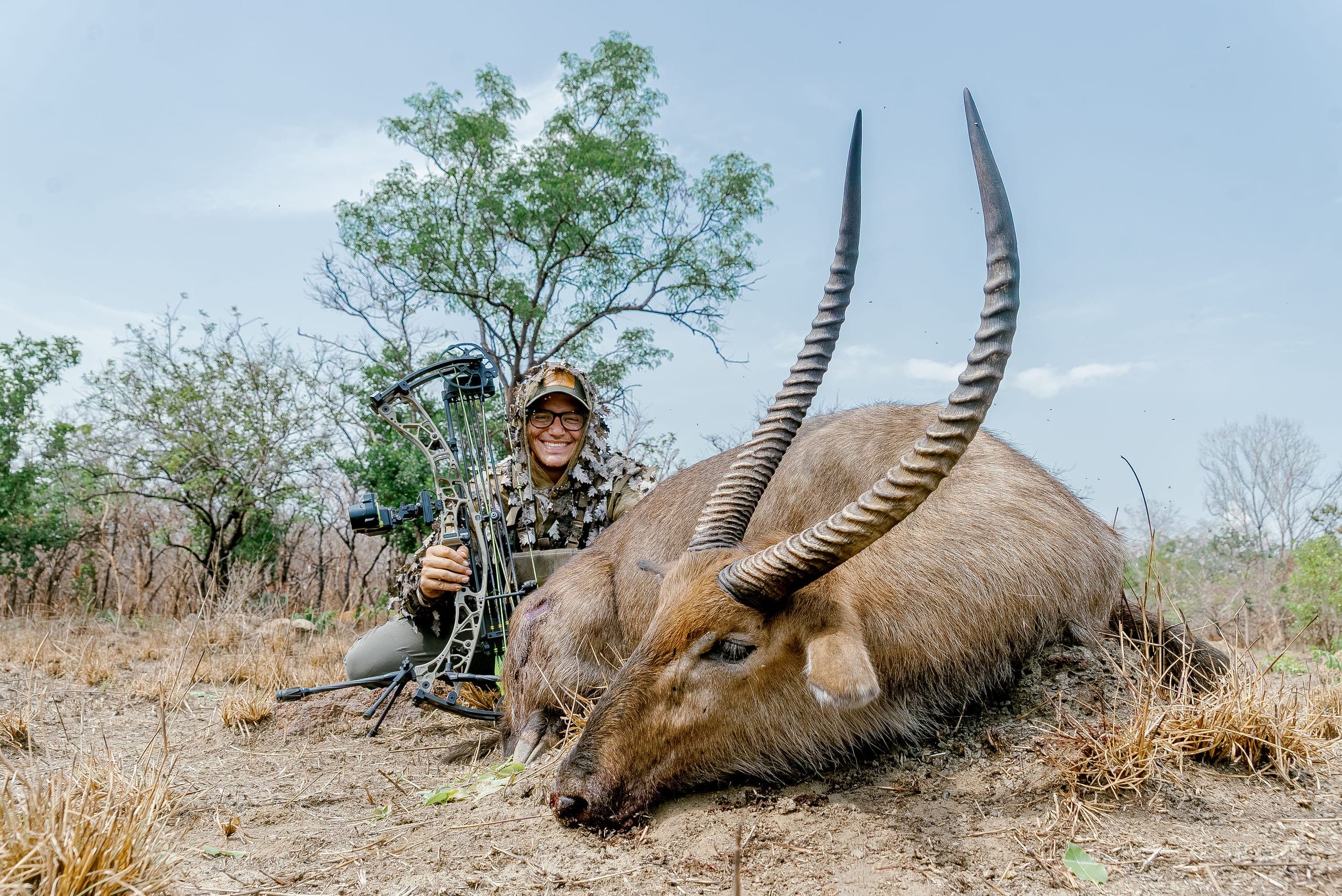
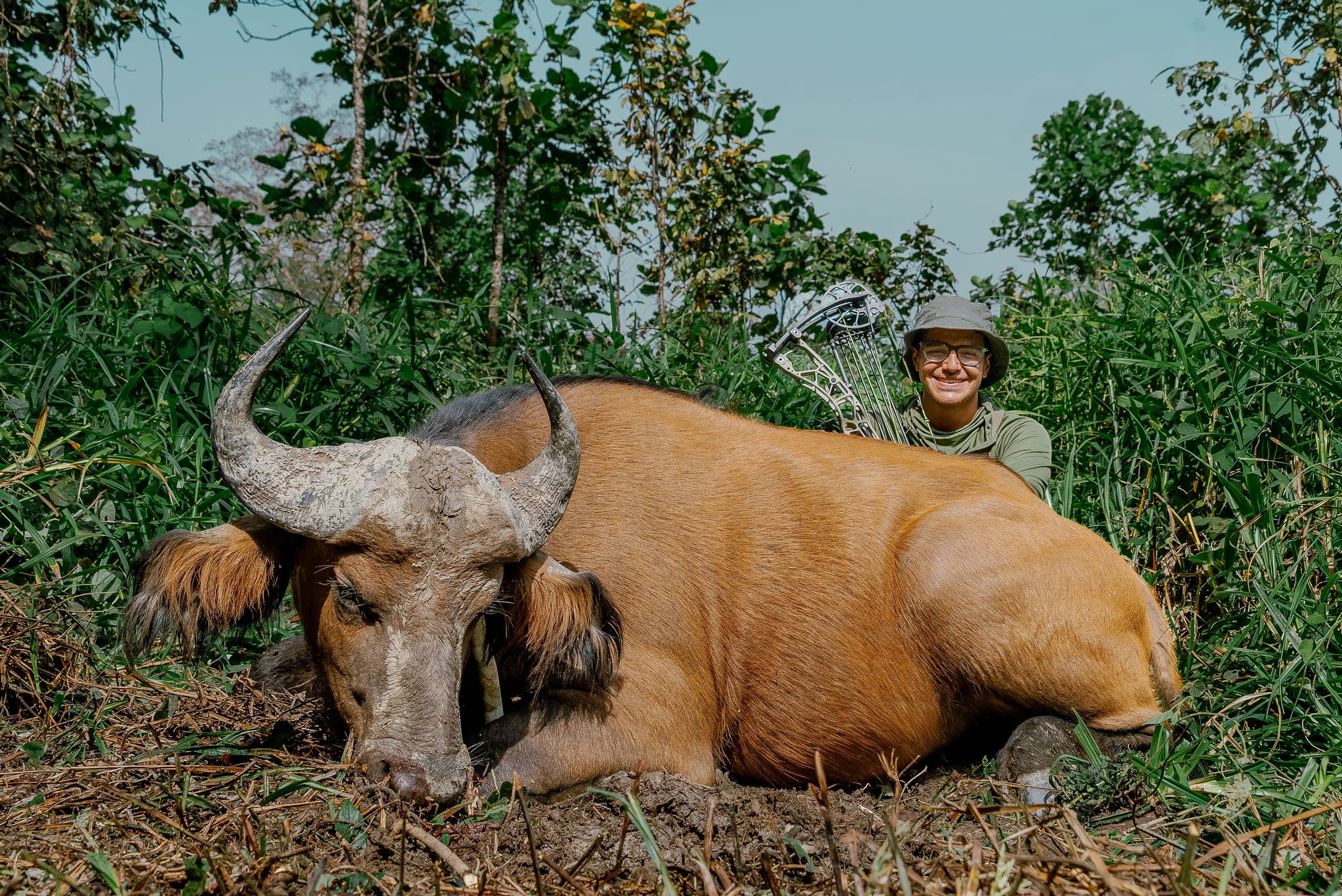
Danie offers hunts across seven destinations: South Africa, Tanzania, Mozambique, Namibia, Uganda, Zambia and Zimbabwe, which means the trip can be built around the species you most want rather than the other way around. Pick two or three target animals that genuinely excite you and let those guide the choice of destination and season.
Be honest about your experience and your effective range. A good outfitter will match your first hunt to your ability and set you up to succeed rather than overreach.
Getting there and travelling with your bow
For most first-timers the journey is simpler than expected. Southern Africa is reached by direct long-haul flights from the USA and Europe into Johannesburg, which is the main gateway for the region and where most hunters connect onward to camp. From there your outfitter arranges the internal logistics.
Travelling with a bow to Africa is routine. A bow travels as checked luggage in a suitable hard case, alongside your other gear, and does not require the firearm permits a rifle would. Pack your bow, arrows, broadheads and essential accessories in a protective case, carry anything irreplaceable in your hand luggage where allowed, and check the current rules for your specific airlines before you fly.
Give yourself sensible connection times and label everything clearly. The travel is the least glamorous part of the trip, and a little planning makes it painless.
Permits, CITES and the paperwork
Hunting permits, any special-weapon clearance and CITES paperwork for certain regulated species are all part of an African hunt, and this is precisely the area where a good outfitter earns their keep. Done right, the paperwork is prepared and correctly timed in advance, so that nothing is scrambled at the last minute.
With Danie's operation, permits, CITES paperwork and weapon clearance are handled for you, along with the flights logistics that tie it all together. Your job is mainly to provide your documents accurately and on time, and to follow the guidance you are given. Keep your passport valid well beyond your travel dates and bring copies of your key documents.
If you plan to hunt a species that needs CITES documentation to bring the trophy home, make sure that is flagged early. Your outfitter will know which animals require it and will build the timing around it.
Preparing yourself before you travel
The preparation that matters most is your own shooting. In the months before the trip, practise from realistic field positions and at the ranges you expect to hunt, and shoot the exact arrows and broadheads you will carry. Building a calm, repeatable shot under a little pressure is the best investment you can make in a successful first safari.
Fitness helps too. Plains-game hunting can involve long spot-and-stalk days on foot, and arriving reasonably fit lets you hunt harder and enjoy it more. Sort out your gear early, break in your boots, and make sure your bow is tuned and your equipment is reliable rather than brand new and untested.
Talk your setup through with your outfitter ahead of time to confirm you have adequate draw weight and arrow mass for your target species. A short conversation now prevents disappointment in the field.
In camp: what to expect
Once you arrive, a typical hunting day settles into a comfortable rhythm of early starts, hunting through the cooler parts of the day, and time in camp to rest, eat well and swap stories. Hunting is done by spot-and-stalk or from a blind over water depending on the species and the ground, and your professional hunter guides the strategy throughout.
A few practical customs are worth knowing. Tipping and gratuities for your PH, trackers and camp staff are customary at the end of a safari and are a genuine thank-you for hard work on your behalf, so budget for them separately. Ask your outfitter in advance what is normal, so you can arrive prepared rather than guessing.
Beyond that, relax into it. A good camp looks after you, and part of the joy of a first African hunt is the experience around the hunting as much as the trophies themselves.
Getting your trophy home
The hunt is not quite over when the animal is down. Afterwards your trophies are dipped, packed and shipped to your taxidermist, a process that typically takes some months and is fully managed and tracked on your behalf. Danie's operation handles the dip, pack and ship of trophies to your taxidermist, so you are not left navigating it alone from the other side of the world.
Knowing this side is taken care of lets you enjoy the hunt itself without worrying about logistics. You hunt, and the trophy makes its way home in good order, ready to remind you of the trip every time you see it.
A first African bowhunt is far more achievable than it looks once you have the right people in your corner. When you are ready to start planning, get in touch and Danie will build the trip around you, from choosing your species to the day your trophy reaches home.
Ready to plan your African bowhunt?
Tell Danie what you're chasing. He'll reply personally within 24 hours.
Start your enquiry